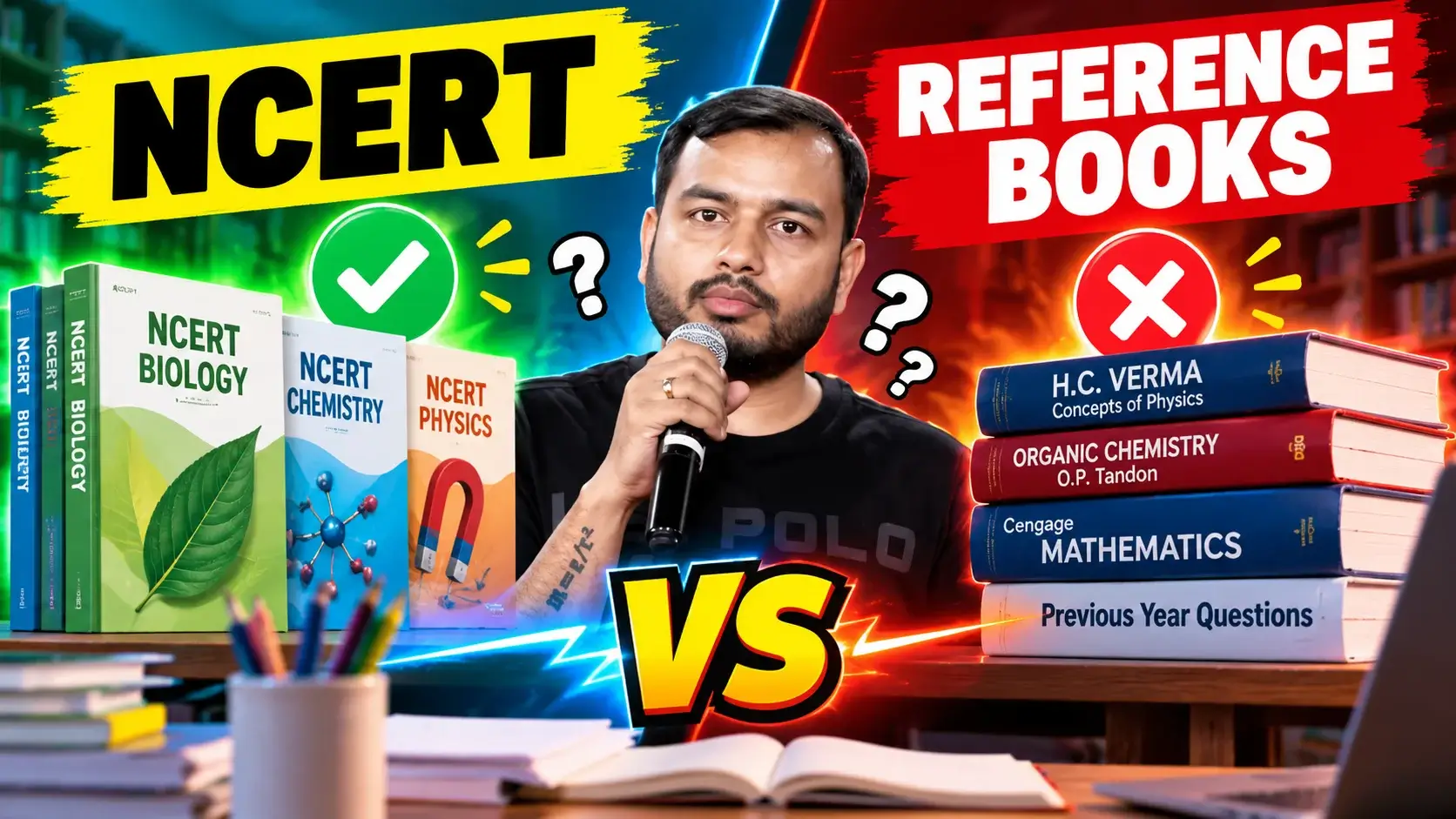
NCERT vs Reference Books: Which Should You Study First?
Are you preparing for NEET or JEE and confused about which books to study first? You are not alone. Many students spend thousands of rupees buying reference books but still struggle to complete their syllabus.
Here is the truth: You don’t need a mountain of books to crack a competitive exam. You need the right books, the right strategy, and consistent practice.
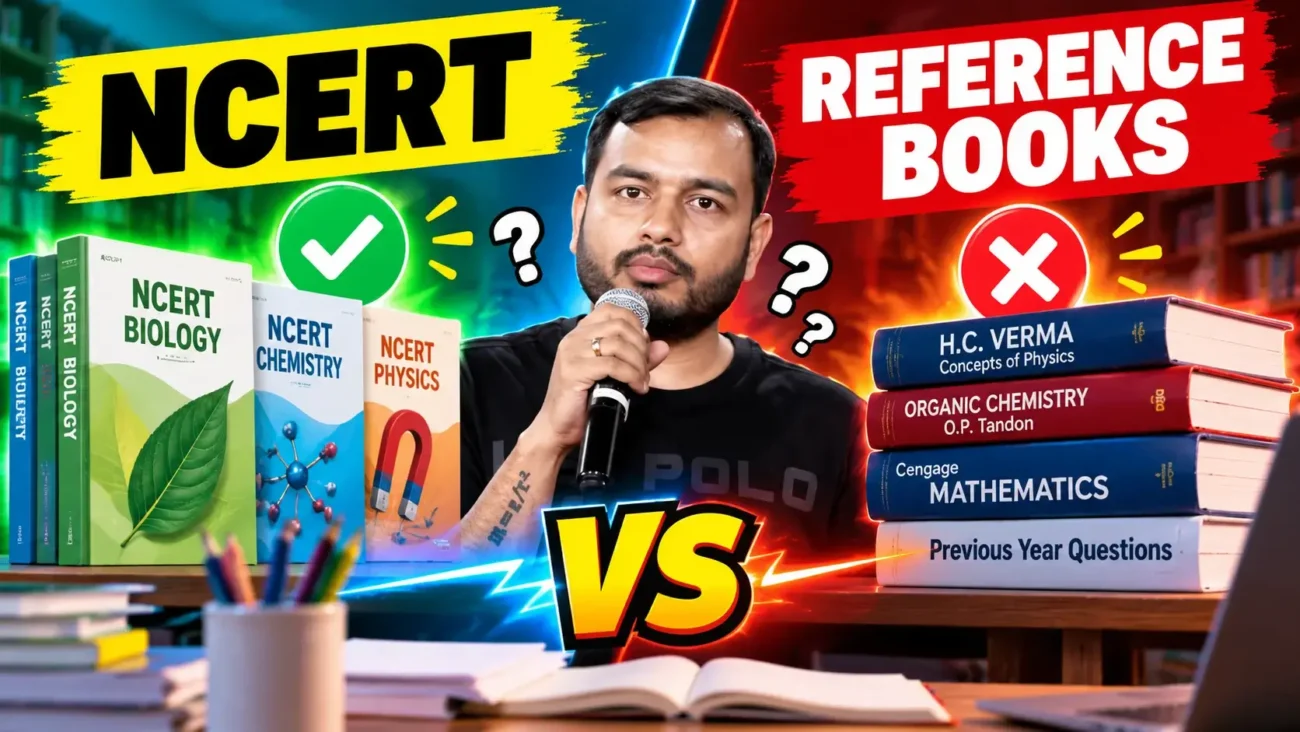
📚 NCERT vs Reference Books: What’s the Difference?
NCERT books explain fundamental concepts in a simple, structured way. They help you understand the basics and are particularly important for school exams and competitive exam preparation.
Reference books go a step further. They offer detailed explanations, additional examples, and more challenging questions to improve your problem-solving skills.
Here’s a quick comparison:
| NCERT Books | Reference Books |
|---|---|
| Best for building fundamentals | Best for deeper practice |
| Simple, structured explanations | Often more detailed explanations |
| Important for NEET Biology | Useful for JEE problem-solving |
| Good for revision | Helpful for challenging questions |
| A strong starting point | Best used after understanding basics |
🎯 NEET Students: Start With NCERT
If you’re preparing for NEET, make NCERT your priority, especially for Biology.
Biology: Read NCERT carefully. Focus on diagrams, tables, examples, and important terminology. Practise MCQs after completing each chapter.
Chemistry: Begin with NCERT to understand the concepts. Then practise numerical questions, reactions, and chapter-wise MCQs.
Physics: Understand the concepts and formulas first. Once your basics are clear, solve numerical problems and previous-year questions.
Don’t rush through chapters just to say you’ve completed them. Understanding and remembering what you study is far more valuable.
🚀 JEE Students: When Should You Use Reference Books?
For JEE Main and JEE Advanced, NCERT provides a useful foundation, particularly in Chemistry. However, Physics and Mathematics often require extensive problem-solving practice.
Follow this simple strategy:
- Understand the topic from NCERT or your main study material.
- Solve the examples and basic questions.
- Practise JEE Main previous-year questions.
- Move to tougher problems as your understanding improves.
- Analyse your mistakes and revise weak concepts.
For Physics, students often use H.C. Verma. For Mathematics, a suitable Cengage series can provide additional practice. Choose resources based on your current level instead of trying to complete every popular book.
💡 The Smartest Study Strategy
Want to avoid wasting time? Follow these three steps:
- Learn: Understand the concept before attempting difficult questions.
- Practise: Solve exercises and previous-year questions.
- Revise: Return to important formulas, concepts, and mistakes regularly.
The biggest mistake students make is switching between several books without completing even one properly.
Remember, completing one book thoroughly is usually better than leaving five books half-finished.
🔍 The NCERT vs Reference Books Is Ideal for Anyone Looking For
- NCERT vs reference books for NEET
- NCERT vs reference books for JEE Main
- NCERT vs reference books for JEE Advanced
- Is NCERT enough for NEET?
- Is NCERT enough for JEE?
- Best books for NEET and JEE preparation
- Best study material for Class 11 and Class 12
- How to prepare for competitive exams
- NCERT-based questions and previous-year papers
- How to improve problem-solving skills
❓ Frequently Asked Questions
1. Should I finish NCERT before reference books?
Generally, yes. Build your foundation first, then use reference books for additional practice.
2. Is NCERT enough for NEET?
NCERT is essential, especially for Biology, but you should also practise MCQs, previous-year questions, and mock tests.
3. Is NCERT enough for JEE Advanced?
NCERT helps with the basics, but Advanced preparation generally requires more challenging questions and deeper conceptual practice.
4. How many books should I study?
Start with one main learning resource and one reliable practice resource. Add more only when necessary.
✅ Final Verdict
When it comes to NCERT vs Reference Books, don’t make things unnecessarily complicated. Start with the basics, practise questions regularly, and use reference books when you need more depth.
Your success depends less on how many books you own and more on how well you understand, practise, and revise what you study.
Study smart, stay consistent, and stop collecting books you never finish!