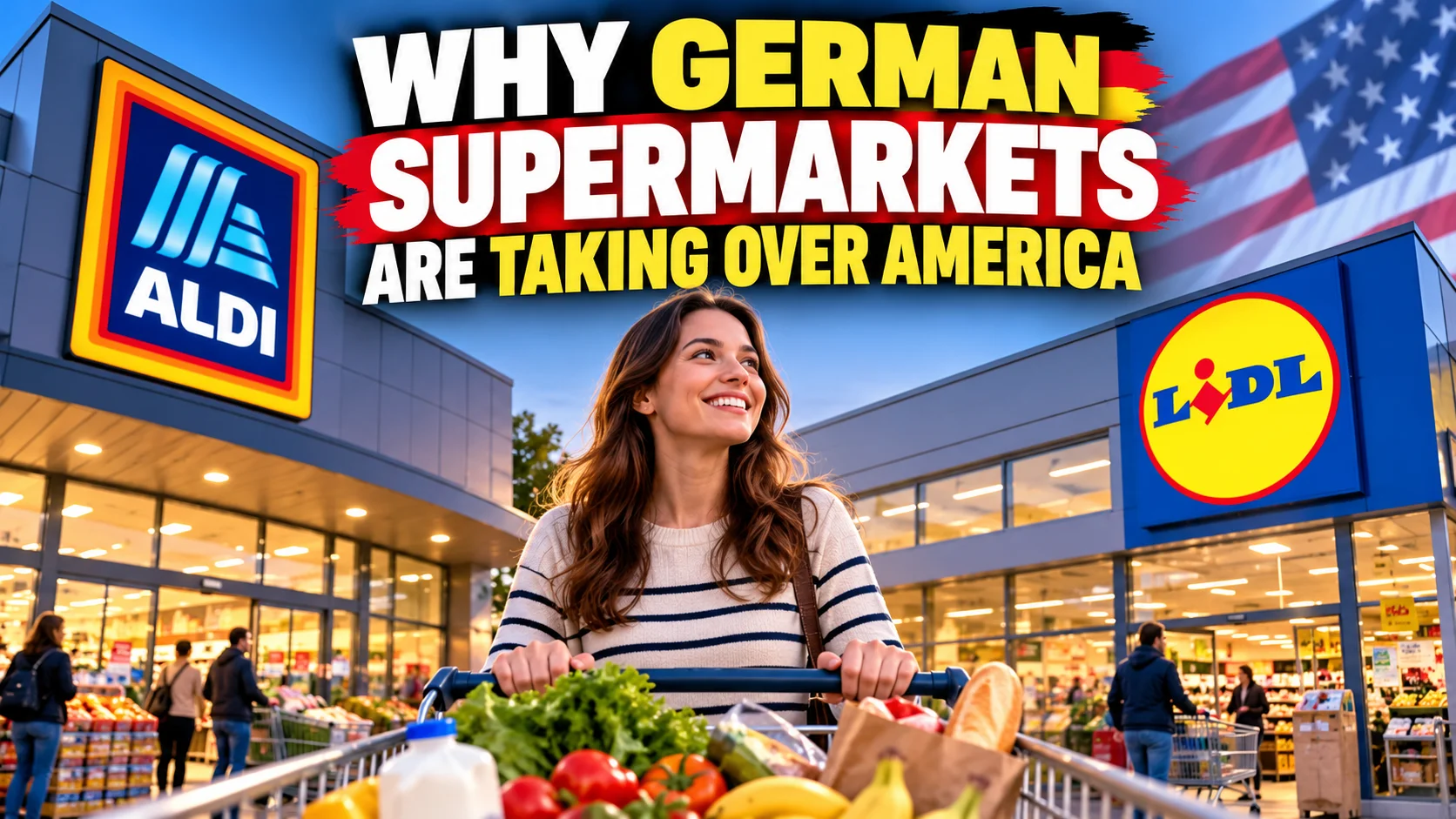
Walk into an Aldi or Lidl in America, and you might wonder what’s going on. The stores are smaller, the shelves have fewer choices, and many products are displayed in cardboard boxes. You even have to pack your own groceries.
Yet millions of Americans are shopping there—and German discount supermarkets are expanding rapidly across the country.
So, what makes these stores so popular? The answer is simple: they offer something shoppers desperately want—lower prices without giving up everyday essentials.

1. Americans Want Cheaper Groceries
Grocery bills have become a major headache for American households. After years of rising food prices, shoppers are paying closer attention to what goes into their carts—and how much it costs.
That’s where Aldi and Lidl stand out. Their prices are often lower than those at traditional supermarkets, especially on everyday essentials.
And it’s not just budget-conscious families making the switch. Younger shoppers are increasingly willing to try store-brand products instead of paying extra for familiar labels.
For many Americans, saving money has become more important than buying the same brand every week.
2. The Secret Behind Their Low Prices
German discount supermarkets follow a simple business model: cut unnecessary costs and pass some of the savings on to customers.
Here’s how they do it:
- More store brands: Aldi sells mostly private-label products, reducing the marketing costs associated with big-name brands.
- Smaller stores: Compact locations generally cost less to operate than enormous supermarkets.
- Simple displays: Products often stay in their shipping boxes, reducing the work needed to stock shelves.
- Fewer employees and extras: Many stores operate without the extensive service departments found in traditional supermarkets.
- Limited selection: Instead of offering dozens of versions of the same product, they focus on popular everyday items.
The result? Shopping can be quicker, simpler and cheaper.
3. Less Choice, Less Confusion
Traditional American supermarkets often carry thousands of products across enormous aisles. That variety can be useful, but it also makes stores more complicated to run.
Aldi and Lidl take a different approach. They focus on the essentials people buy regularly, while seasonal products and limited-time deals add variety.
This means shoppers may not find every brand they want, but they can often finish their shopping without wandering through endless aisles.
For busy families, that simplicity is part of the appeal.
4. Why Aldi Is Growing So Quickly
Aldi has become one of the biggest names in American discount grocery shopping. Its expansion includes opening new stores and converting locations acquired from other supermarket chains.
Lidl is also building its presence, although its American footprint remains much smaller.
Both companies have adapted their European approach to American tastes. Shoppers can find familiar products such as bagels, mac and cheese, fresh produce and organic options alongside Aldi and Lidl’s own brands.
They are not simply copying Europe. They are adjusting the model for American shoppers while keeping its cost-saving principles.
5. Traditional Supermarkets Have a New Problem
The rise of German discounters puts pressure on established grocery chains. When customers discover they can buy everyday essentials for less, traditional supermarkets have to work harder to justify their prices.
That can mean better private-label products, more promotions and closer attention to operating costs.
Still, Aldi and Lidl are not perfect for everyone. Some shoppers miss the wider selection, full-service departments and familiar national brands. Popular locations can also get crowded.
But their continued expansion shows that a growing number of consumers are willing to trade some convenience and variety for savings.