I Studied 14 Hours a Day in Kota for 2 Years — Here’s What Really Happened


By: A Kota Survivor | Category: Real Student Stories | Read Time: 12 minutes
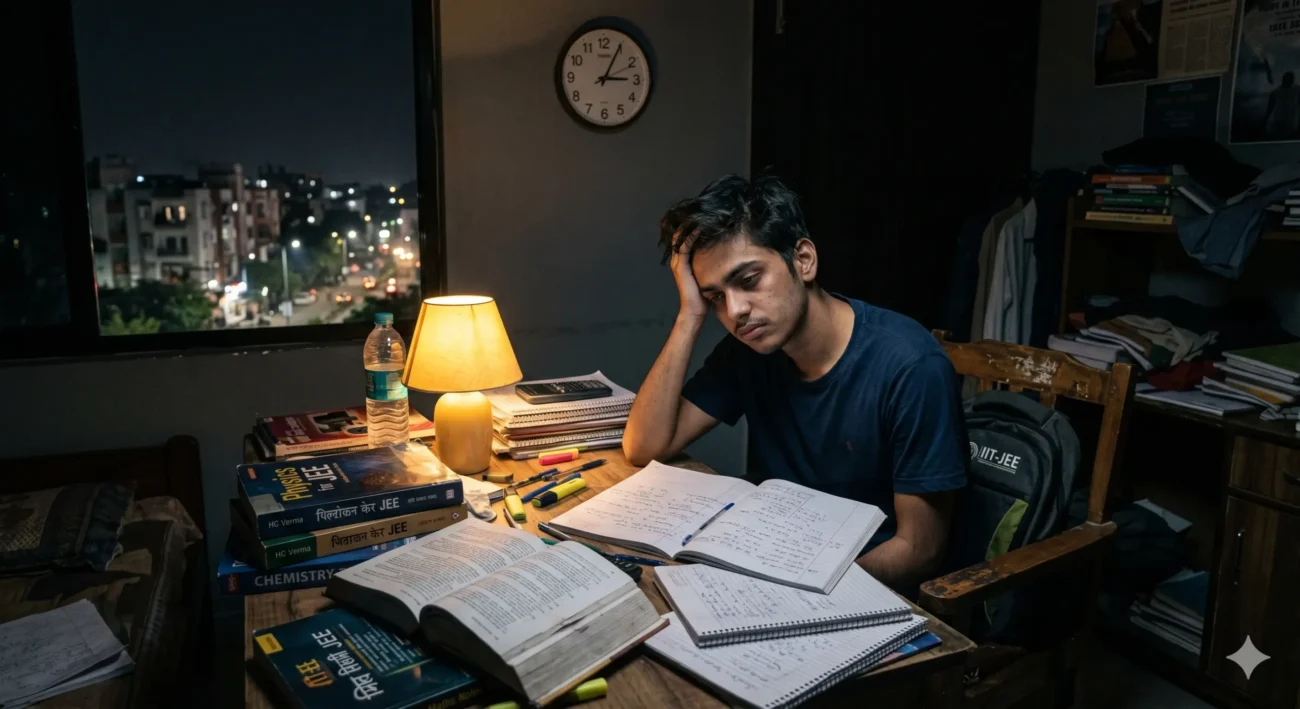
I still remember the morning my parents dropped me off in Kota. My mother cried at the bus station. My father patted my shoulder and said three words: “Mehnat karna, beta.” Work hard, son. I was 16 years old, carrying two suitcases and a dream of IIT. What followed the next two years was nothing like the brochure.
This is not a success story. This is not a failure story either. This is the truth — raw, unfiltered, and everything the coaching institutes will never tell you.
1. The First Week: Paradise Turns Into Prison
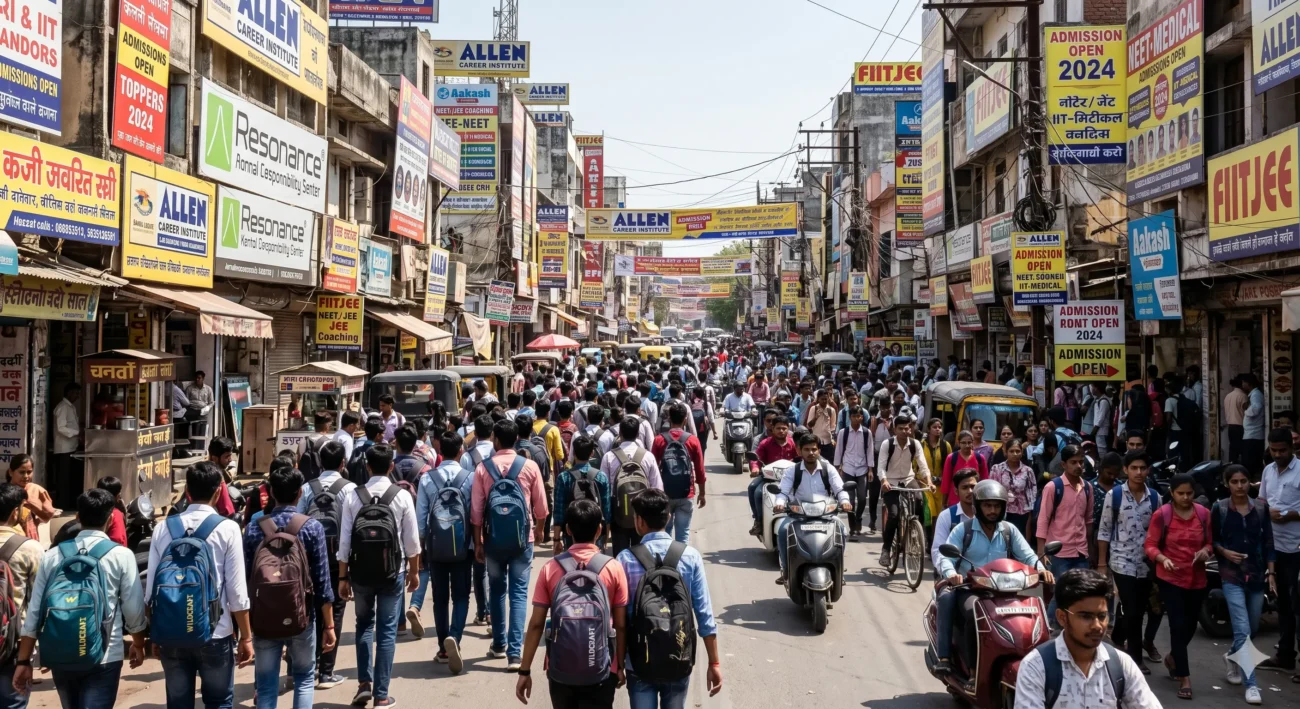
Kota looks exciting in the first week. Your hostel room is new. The city feels electric. You see thousands of students like you — all chasing the same dream. The coaching institute gives you a thick schedule booklet. You feel motivated. You feel like you’ve finally come to the right place.
By Day 10, reality hits. Your first class starts at 7 AM. You’re back in your room by 9 PM. Dinner is at 9:30. By 10 PM you’re supposed to study again until 1 AM. The schedule isn’t a suggestion — it’s survival. Miss one class and you’re already 3 chapters behind.
I remember calling home on Day 12 and telling my parents everything was “fine.” It wasn’t. I had already cried twice. Alone. In the bathroom. With the tap running so my roommate wouldn’t hear.
2. What 14 Hours of Studying Actually Looks Like
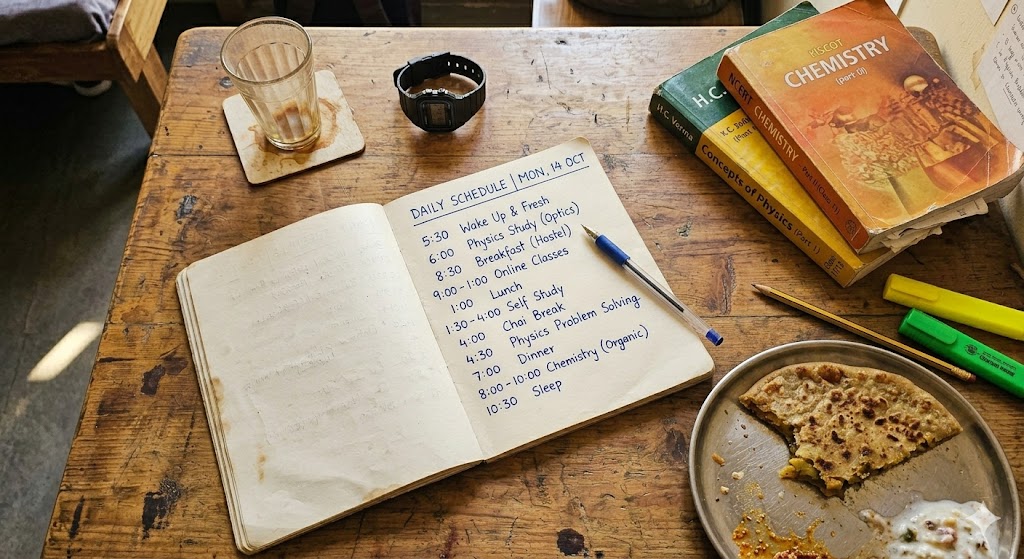
Let me be honest about what 14 hours of study actually looks like — because it’s not what you imagine.
- 5:30 AM — Wake up. Splash water on face. Pray it’s not a Physics day.
- 6:00 AM — Revision of yesterday’s notes (often half-asleep)
- 7:00 AM — Class 1 (Physics/Chemistry/Maths, 3 hours)
- 10:00 AM — 30-minute break. Eat something. Check phone for 5 minutes.
- 10:30 AM — Class 2 (3 more hours)
- 1:30 PM — Lunch. Hostel mess. Dal and rice. Again.
- 2:30 PM — Self-study block (3 hours — this is where most students waste time)
- 5:30 PM — Class 3 or DPP (Daily Practice Problems)
- 8:00 PM — Dinner
- 9:00 PM — Night study. Mock tests. Revision.
- 12:30–1:00 AM — Sleep. If you’re lucky.
That’s the schedule on paper. In reality? At least 3 of those “study” hours are spent staring at the wall, scrolling through phone, or fighting sleep. Real productive study time for most students: 6–8 hours. Not 14. Anyone who says otherwise is either lying or has superhuman focus.
3. Month 3: When the Cracks Begin to Show
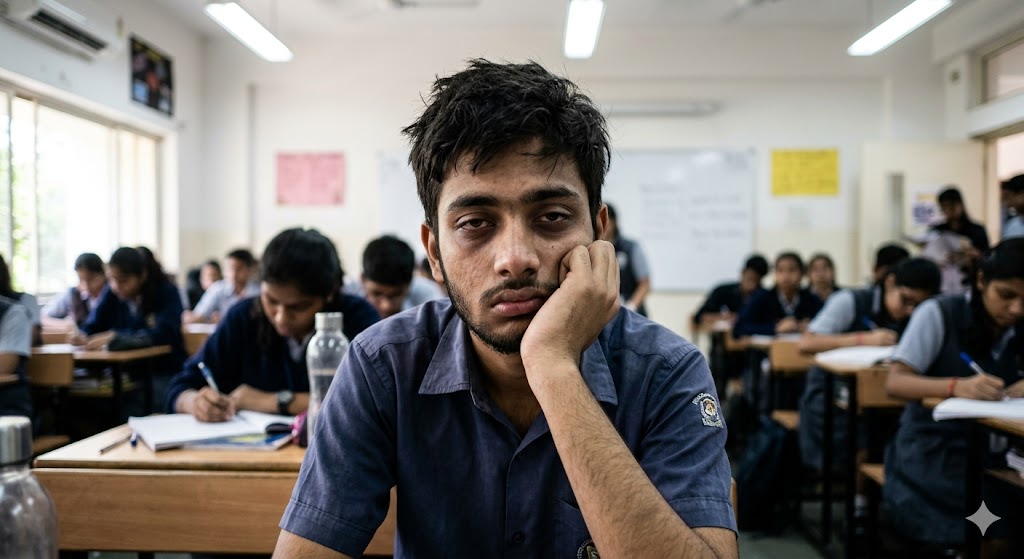
By the third month, I could see who was thriving and who was drowning. The rankers — maybe 10–15 students in a batch of 120 — had already separated themselves. They asked questions in class. Their DPP scores were consistently above 80%. They seemed to have a gear we didn’t.
The rest of us? We were copying DPP answers from each other before class just to avoid being called out by the teacher. We were memorizing solutions without understanding them. We were performing the act of studying rather than actually studying.

My first test score: 67 out of 360. I told my parents I got “around 100.” Shame does strange things to people.
⚠️ The Dirty Secret: In most Kota batches, only the top 10–20% of students are genuinely learning. The rest are surviving — going through the motions, hoping something sticks before exam day.
4. The Loneliness Nobody Talks About
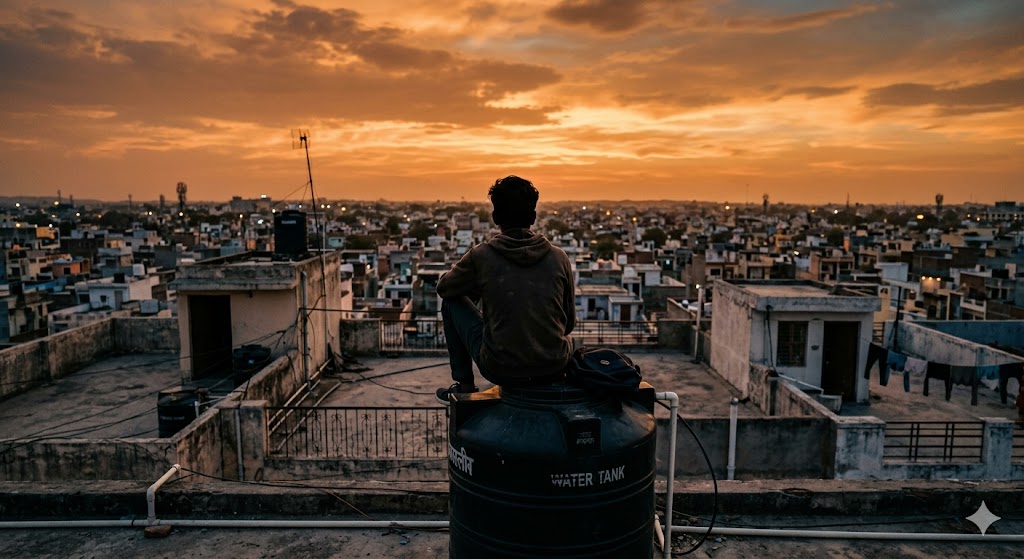
Nobody prepares you for how deeply lonely Kota can be. You are surrounded by 50,000 students at all times. There are people in every corridor, every chai stall, every library. And yet, you have never felt more alone in your life.
Your friends from school are posting about their college trips. Your cousins are at weddings, birthday parties, family dinners. You are eating dal-roti alone in a 10×10 room on a Sunday, staring at an Organic Chemistry chapter that refuses to make sense.
I made exactly two real friends in two years. One dropped out after 8 months. The other cracked JEE Advanced and got CSE at IIT Bombay. We still talk. He told me last year that he cried every single night for the first 4 months. Even the topper. Even him.
5. The Mock Test Cycle: Hope, Crash, Repeat
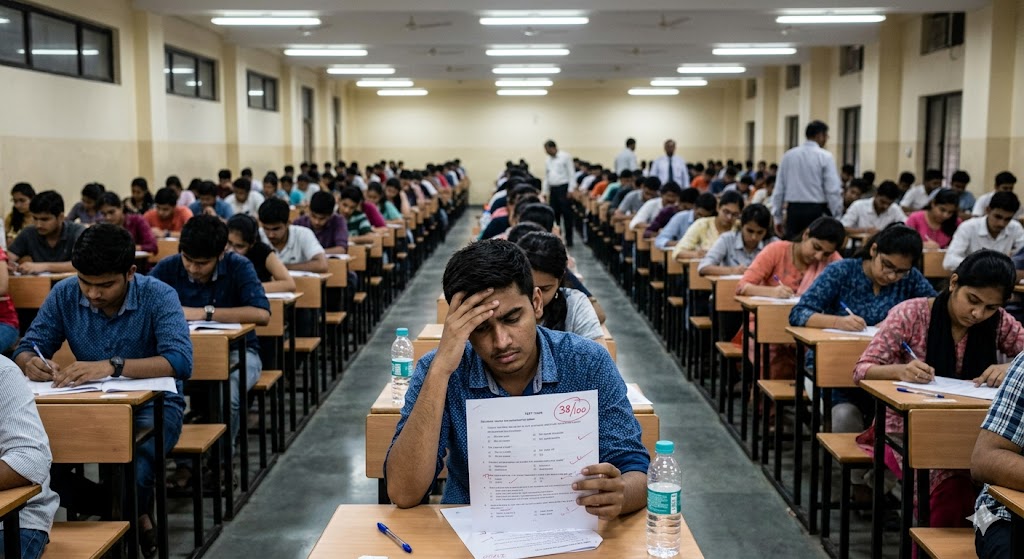
Every two weeks in Kota, you sit a mock JEE. Full 3-hour exam. Real conditions. Your score gets posted on a leaderboard visible to your entire batch. This is either the greatest motivational tool ever invented, or the fastest way to destroy a 16-year-old’s confidence. Sometimes both.
The cycle works like this: You study hard → feel confident → give mock → score drops → feel crushed → motivate yourself → study hard again → repeat for 2 years. Every single student in Kota knows this cycle. Every single one has been through it at least a dozen times.
The difference between those who crack JEE and those who don’t often comes down to one thing: how fast you recover from a bad mock. The toppers I knew could reset within 24 hours. The students who dropped out often couldn’t recover for weeks.
6. What I Wish Someone Had Told Me Before Kota
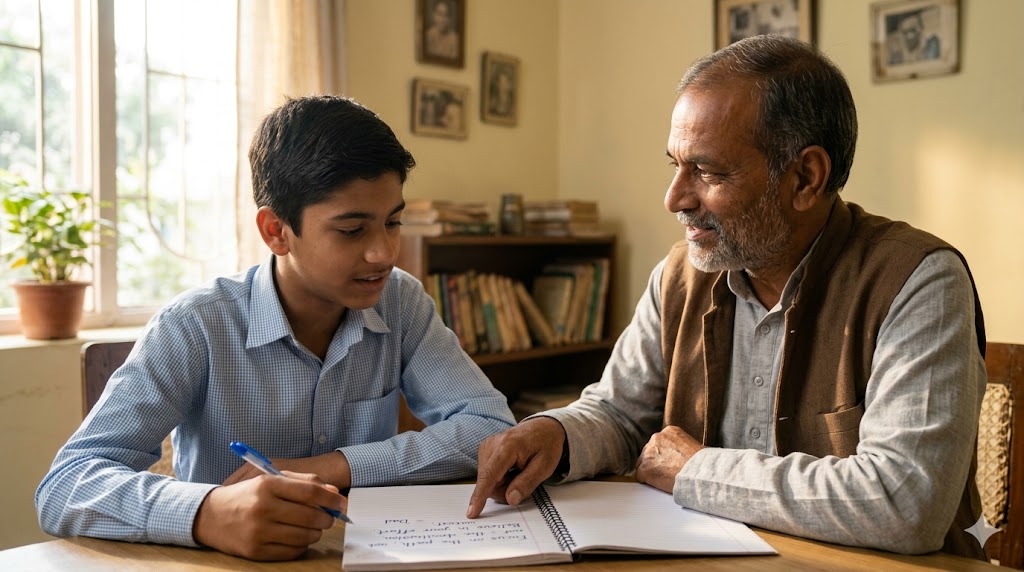
After two years and countless mistakes, here is what I know now that I desperately needed to know then:
- Quality of study beats quantity every time. 5 focused hours will always beat 12 distracted hours. Always.
- Your mental health is not a luxury — it is the foundation. If your mind breaks, your preparation breaks.
- The rank list at Kota has zero correlation to JEE rank. Some of India’s biggest JEE toppers were average in Kota.
- Homesickness is not weakness. It is biology. Acknowledge it, call home, and move forward.
- Find your tribe early — even one or two honest friends will save your sanity.
- Sleep is not the enemy of preparation. It is preparation. Never sacrifice sleep for more than 2 consecutive days.
- If you’re not understanding something after two attempts, ask for help immediately. Ego has failed more JEE dreams than lack of intelligence.
- Exercise for at least 30 minutes every day. Non-negotiable. Your brain works on blood flow.
7. The Result — And What It Really Meant
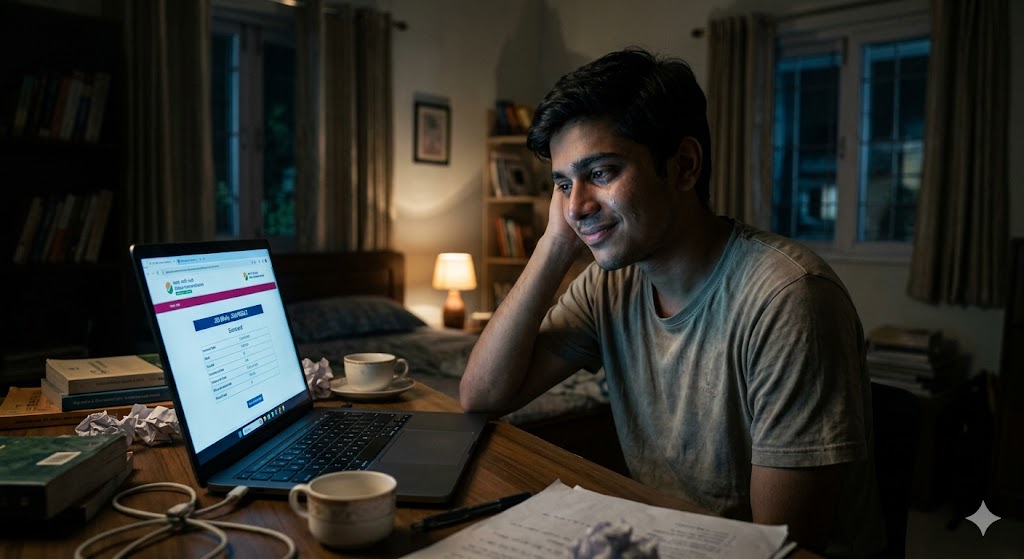
I did crack JEE. Not JEE Advanced — Mains. Rank 24,000-something. Enough for a decent NIT. Not IIT. Not the dream my parents had packed into those two suitcases.
My roommate, who studied maybe 8–9 hours a day but with surgical focus, got AIR 1,847. He’s at IIT Kharagpur now, doing incredibly well. Hours don’t matter as much as we think they do.
Would I go back to Kota if I could? I genuinely don’t know. It made me harder. More resilient. More self-aware. It also cost me two years of my teenage life, my relationship with my parents became awkward for a while, and I developed anxiety that I still manage today.
What I know for certain: I am proud I survived it. And I’m proud to tell you the truth about it — because you deserve honesty more than you deserve motivation.
Final Words: Should YOU Go to Kota?

Kota works — but only for a specific type of student. You need to be self-motivated, emotionally resilient, and able to study independently. If you need constant hand-holding, if you struggle with loneliness, if your mental health is already fragile — Kota might do more damage than good.
If you do go: go with open eyes. Know that the schedule is brutal. Know that the loneliness is real. Know that your rank in Kota tests means almost nothing. Know that your mental health is more important than any exam.
And know this: thousands of students crack JEE every year without ever setting foot in Kota. The city is a tool. You are the craftsman. A tool is only as good as the hands that hold it.